Decent insulation
Loft done, cavities filled, double glazing. Lower heat loss means a smaller system at a lower flow temperature, which is cheaper to buy and cheaper to run.
Suitability
The honest answer, worked out from heat loss rather than from the age of the building or a guess over the phone.
Good signs
Loft done, cavities filled, double glazing. Lower heat loss means a smaller system at a lower flow temperature, which is cheaper to buy and cheaper to run.
If you are on a system or regular boiler with an airing cupboard, the biggest practical hurdle is already solved.
On oil or LPG the running cost case is strongest, and the grant may be £9,000 rather than £7,500 until March 2027.
Worth checking first
Not a dealbreaker, but higher heat loss means a bigger system and more radiator changes. The survey says how much.
You need somewhere for a cylinder. Airing cupboard, loft, garage or utility. If there is genuinely nowhere, that is a real obstacle and we will say so.
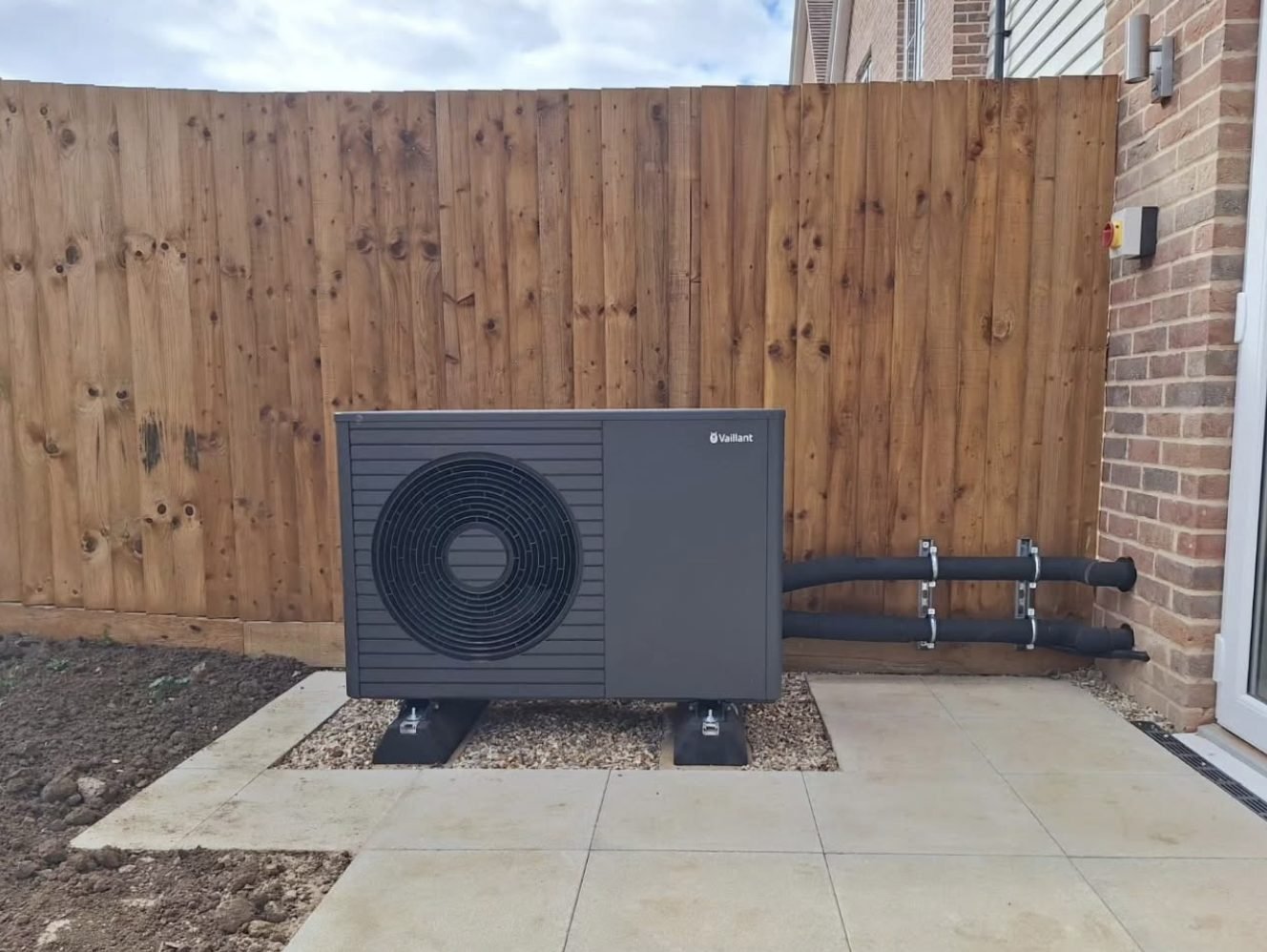
The unit needs clear airflow and sensible distance from bedroom windows. Tight terraces and some flats are harder, though not always impossible.
A heat loss survey gives you a real answer instead of an opinion.
The survey
This is the part that decides whether you end up happy. It is not a ten minute look round with a clipboard.
FAQs
Not always, but it changes the sums. Insulation lowers heat loss, which lets us fit a smaller system running at a lower flow temperature, which costs less to buy and less to run. If your loft is thin or the cavities are empty, doing that first is usually better value than fitting a bigger heat pump to compensate.
No, but it means higher heat loss and usually larger radiators. Plenty of solid-wall houses run heat pumps perfectly well. The survey tells you what it would take rather than guessing from the age of the building.
You will need somewhere for a cylinder, because a heat pump heats water into a store rather than on demand. An airing cupboard, loft, garage or utility usually works. Finding that space is the most common practical obstacle we come across, and it is worth checking early.
Less than people expect, but it needs clear air front and back. A typical domestic monobloc is roughly the size of a large chest freezer lying down. It should not be boxed into a tight alcove or smothered by planting, because restricted airflow directly costs efficiency.
Most domestic installations fall under permitted development provided siting and noise conditions are met, but conservation areas and listed buildings are different and flats have their own considerations. We check it for your property rather than assuming.
We will tell you. That is not a wasted conversation — knowing that your house needs insulation work first, or that the cylinder space is not there, saves you from an expensive mistake. We would rather lose the job than fit something that disappoints you.
Often most of them, yes. The heat loss calculation works out room by room which radiators deliver enough heat at the lower flow temperature and which need upsizing. It is usually a handful, not a full replacement.
Get in touch
Tell us about the property and we will come back to arrange a time and explain exactly what the survey covers and what you get at the end of it.
Speak to someone
0113 490 0618Happy to talk it through before anybody books a survey.
No obligation, and no pressure. If a heat pump is the wrong answer for your house we will say so.