Absorb
Outside air passes over a coil containing refrigerant that boils at a very low temperature. Even cold air carries enough energy to turn it into gas.
How they work
No flame, no flue, no gas. It moves heat that is already in the outside air into your radiators and hot water cylinder.
The principle
That is genuinely the whole idea. A fridge takes heat out of the food compartment and dumps it out of the back. A heat pump takes heat out of the outside air and puts it into your house.
Outside air passes over a coil containing refrigerant that boils at a very low temperature. Even cold air carries enough energy to turn it into gas.
A compressor squeezes that gas, which raises its temperature sharply. This is the step that uses the electricity.
The hot gas passes through a heat exchanger and gives its heat to the water in your heating system and cylinder.
The refrigerant cools, expands, and goes round again. Continuously and quietly, rather than firing on and off like a boiler.
The number that matters
A boiler does not much care whether it sends water out at 50°C or 70°C. A heat pump cares enormously, and that single fact explains most of the difference between a cheap system to run and an expensive one.
No pressure and no sales script. Ring and ask whatever you want to ask.
Honest comparison
Running cost comparisons depend on your tariff, your insulation and how the system is designed and set up, so we will not put a headline saving figure on this page. We will talk you through what the numbers look like for your house at survey stage.
FAQs
No. There is no flame, no flue and no gas. It uses electricity to move heat that is already in the outside air into your heating system, which is why it can deliver more heat energy than the electrical energy it consumes.
It isn’t creating energy, it is moving it. For every unit of electricity it uses it might move three or four units of heat indoors, which is what the COP figure describes. A gas boiler can never exceed one unit of heat per unit of gas, because it is burning fuel rather than moving heat.
COP is efficiency at one moment. SCOP is the seasonal average across a whole heating year, which is the number that actually reflects your bills. It is heavily affected by flow temperature, so a well-designed system running at 40°C will beat the same unit forced to run at 55°C.
A heat pump works harder the hotter it has to push the water. Drop the flow temperature and efficiency rises sharply. That is why radiator sizing and heat loss calculations matter — bigger radiators let the system run cooler, which makes it cheaper to run for the next fifteen years.
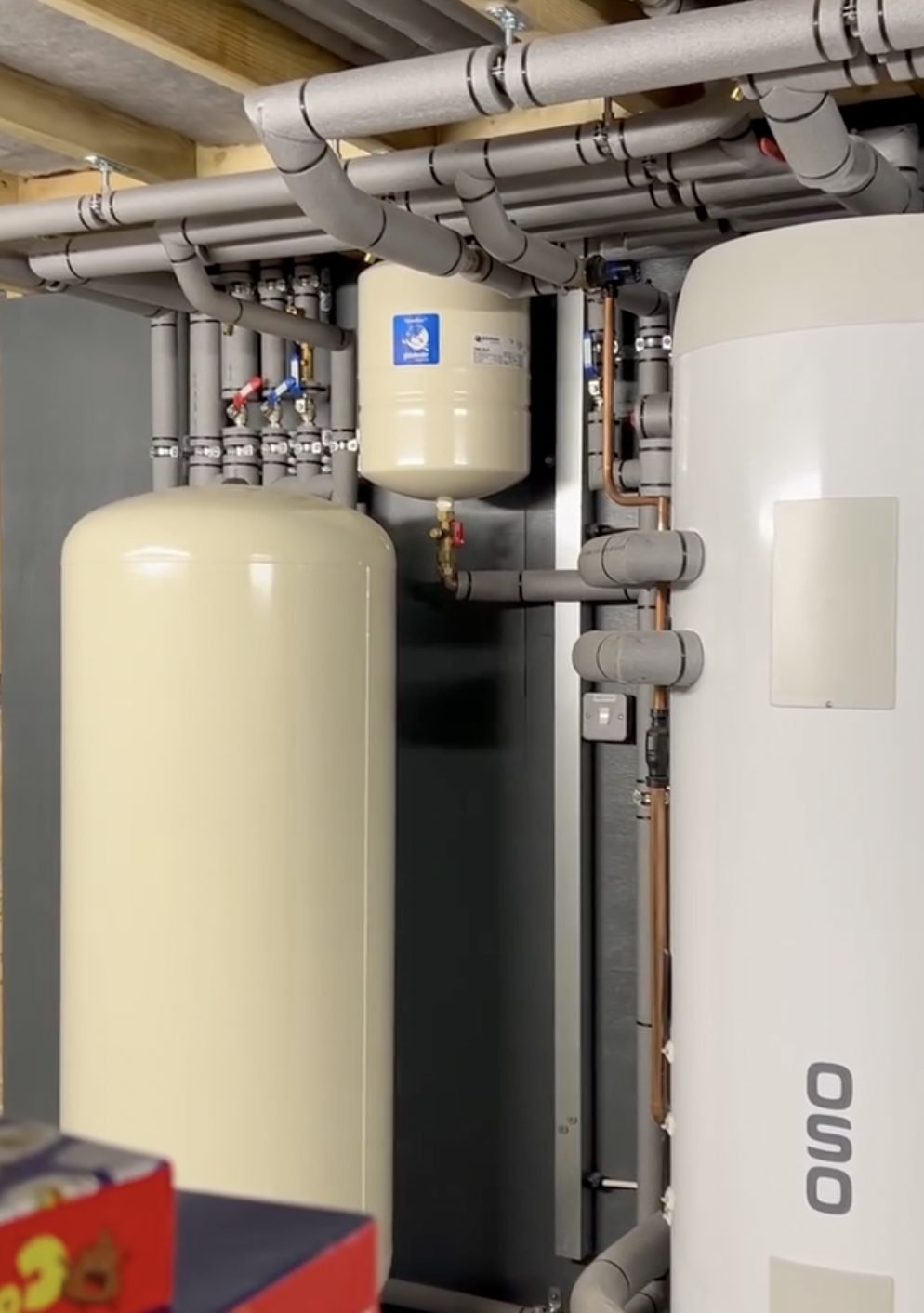
A buffer is a small store of heated water that stops the heat pump short-cycling when the system demand is low. Whether you need one depends on system volume and how the zones are arranged. Some installs need one, plenty do not, and fitting one where it is not needed can actually hurt efficiency.
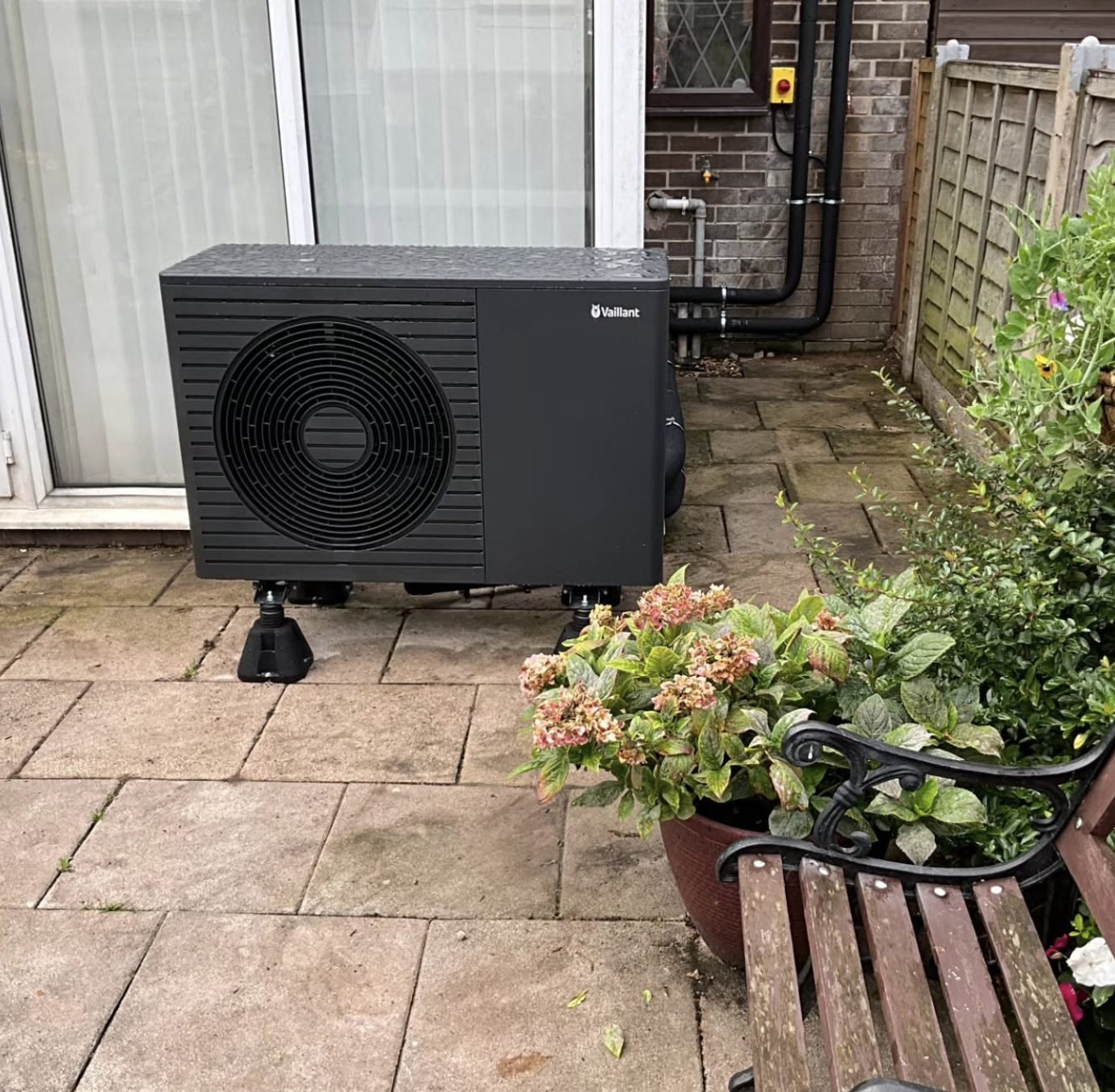
A monobloc has everything in the outdoor unit and just water pipes running into the house, which is simpler and needs no refrigerant work indoors. A split puts part of the system inside. Most domestic retrofits here are monobloc, and that is what the units in our photos are.
Get in touch
The honest answer about a heat pump depends on your actual house — its heat loss, its radiators and its hot water. Tell us the basics and we’ll tell you where you stand.
Speak to someone
0113 490 0618Happy to talk it through before anybody books a survey.
No obligation, and no pressure. If a heat pump is the wrong answer for your house we will say so.